

Dubai’s real estate market offers investors something that isn’t always as common in more established markets: the opportunity to purchase a property before it’s completed, sometimes before construction has even begun.
Known as off-plan investing, this approach allows buyers to secure a property based on the developer’s plans, with payments typically spread across various stages of construction.
The appeal is easy to understand. Flexible payment plans, the potential for capital appreciation, and access to new developments can make off-plan properties attractive. But purchasing something that doesn’t yet exist comes with considerations that are very different from buying a completed home.
Before investing, it’s important to understand not only the opportunities, but also the risks, costs, and factors that can influence the outcome.
The right off-plan investment isn’t necessarily the one with the lowest starting price or the most attractive payment plan. It’s the one that aligns with your financial goals, investment timeline, and long-term strategy
Choosing the Right Project, Developer, and Payment Plan
With so many off-plan developments launching across Dubai, choosing the right property involves more than finding an attractive location or a competitive starting price.
Start with the developer. Look beyond the marketing materials and examine their track record. Have they delivered previous projects on time? How does the quality of their completed developments compare with what was originally promised? An established history of successful delivery can provide greater confidence, although no developer can guarantee that delays won’t occur.
Evaluate the project itself. Consider its location, surrounding infrastructure, future development plans, and the amount of competing residential supply expected in the area. A promising location today may look very different by the time construction is completed.
Choose a payment plan that works for you. One of the attractions of off-plan investing is the ability to spread payments over time. However, not all payment plans are equally suitable for every buyer. Some require larger payments during construction, others defer a substantial portion until handover, and certain developers even offer post-handover payment plans, allowing buyers to continue making installments after receiving the property.
It’s also important to consider your investment timeline. Capital committed to an off-plan property may remain tied up for several years before the property can generate rental income. For an investor planning to hold the property long term, this may fit comfortably within their strategy. For someone who needs greater liquidity or expects an earlier return, it deserves closer consideration.
Ultimately, the right off-plan investment isn’t necessarily the project offering the lowest starting price or the most appealing payment plan. It’s the one that aligns with your financial position, investment objectives, and tolerance for uncertainty.
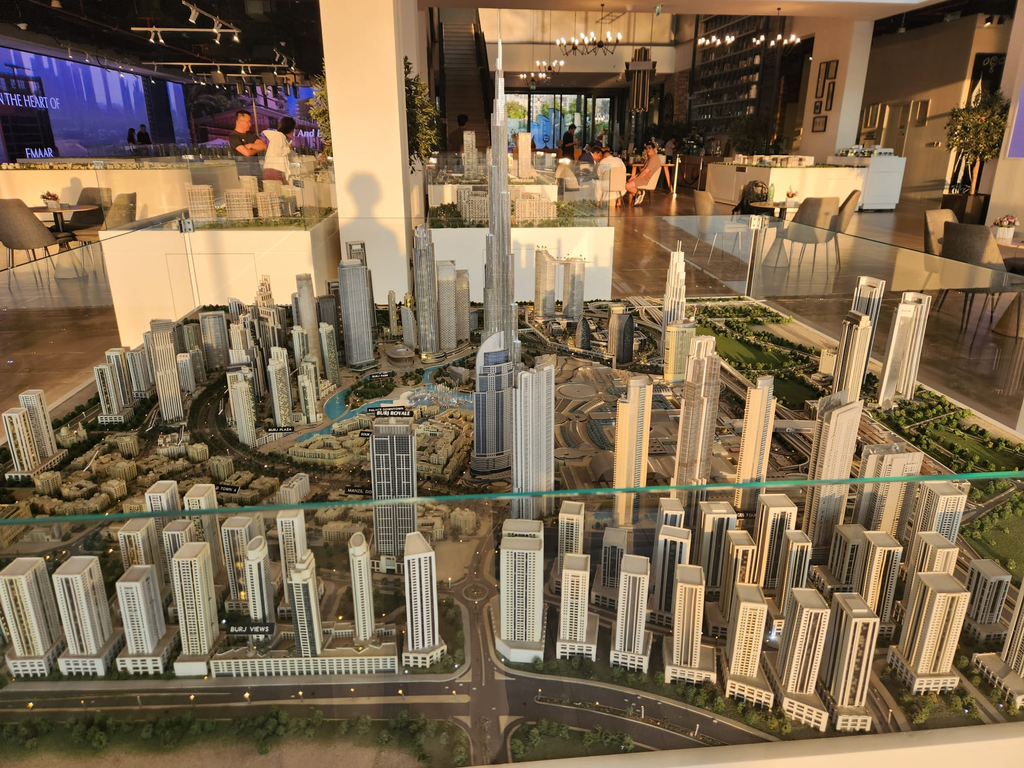
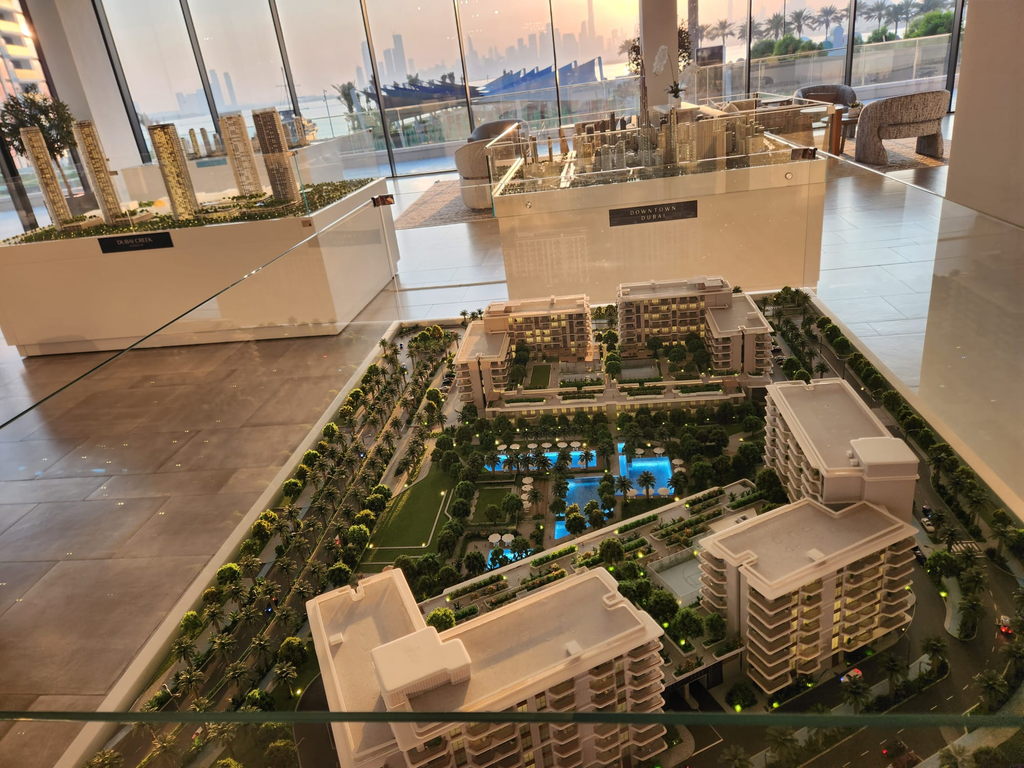
Development models photographed during my visit to an Emaar sales gallery in Dubai.
Understanding the True Cost of an Off-Plan Investment
The advertised purchase price is only part of the financial picture. Before committing to an off-plan property, investors should understand the upfront costs, payment obligations, and expenses that may arise after completion.
One of the most significant additional expenses is the Dubai Land Department (DLD) registration fee, generally calculated at 4% of the purchase price. Buyers should also account for applicable registration and administrative charges. Occasionally, developers offer incentives that cover some or all of these costs, so it’s worth understanding exactly what is included in the offer.
For example, consider an off-plan apartment priced at AED 2 million with a 60/40 payment plan:
| Expense | Amount |
|---|---|
| Purchase price | AED 2,000,000 |
| DLD registration fee (4%) | AED 80,000 |
| Payments during construction (60%) | AED 1,200,000 |
| Payment at handover (40%) | AED 800,000 |
In this example, the investor’s total commitment is at least AED 2.08 million, before other applicable fees and expenses. The payment schedule determines when those funds are needed, but it doesn’t change the total purchase obligation.
Investors planning to rent out the property should also consider future service charges, maintenance, furnishing costs, and potential vacancy periods. These expenses affect the property’s net rental return.
The same careful approach applies to capital appreciation. A developer’s projected increase in property value should not be treated as a guaranteed return. Compare the purchase price with similar properties, evaluate future supply, and consider whether the numbers still make sense under more conservative assumptions.
A sound investment decision begins with understanding the full financial commitment, not simply whether the initial booking amount is affordable.
Final Thoughts: Investing with Confidence
Dubai’s off-plan market offers a wide range of opportunities, but not every development will be the right fit for every investor.
The key is to look beyond attractive launch prices, promotional incentives, and projected returns. Understanding the developer, evaluating the location, reviewing the payment structure, and considering your long-term objectives can make a significant difference in your investment experience.
Whether you’re purchasing your first investment property in Dubai or expanding an existing portfolio, the goal should be the same: making a well-informed decision that supports your financial strategy.
Considering an off-plan investment in Dubai?
As a real estate advisor and investor, I believe in evaluating opportunities from the buyer’s perspective—not simply promoting the latest project launch.
If you’re exploring Dubai’s off-plan market, I’d be happy to help you compare developments and identify opportunities that align with your investment goals.